
Strategic Plans
The strategic plans that set where BACKSLASH is heading and how we will know we are making progress.
Our strategic plans set out where BACKSLASH is heading, why, and how we will know we are making progress. They turn our experience since 2014 into a shared framework for choosing projects, building partnerships and learning from results. Read the current plan here, or download it to keep.
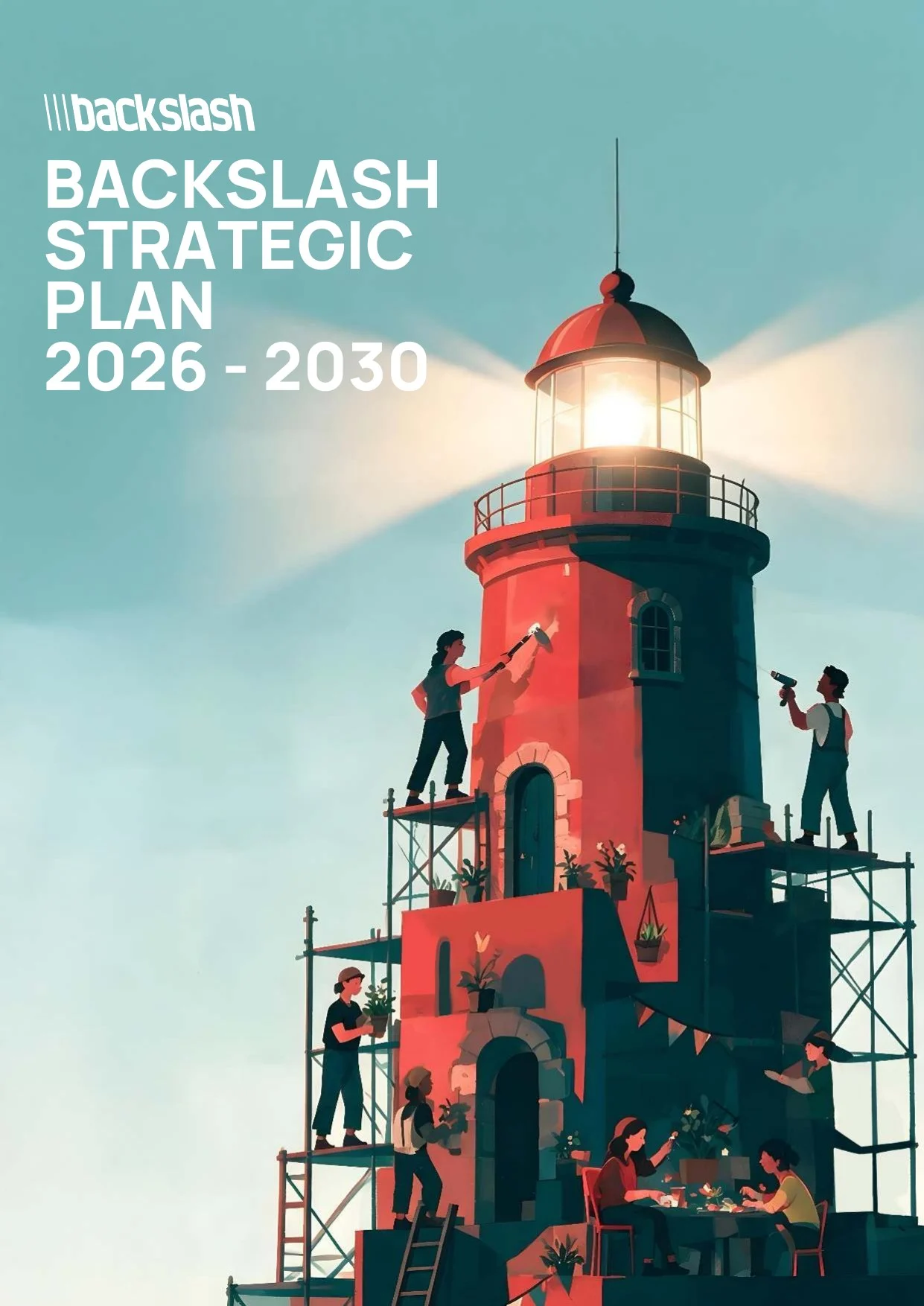
Current plan · 2026–2030
BACKSLASH Strategic Plan 2026–2030
We begin this strategic cycle from a position of consolidation and openness. Since 2014 we have built a track record in non-formal education, transnational collaboration, social inclusion, the defence of human rights and youth participation. The plan gives us a common framework to decide where to focus our efforts, how to connect our initiatives and how to learn systematically from the results.
- 32 pages
- 4 strategic areas
- 11 thematic priorities
- Reviewed every year
Impact does not depend solely on the number of activities or projects we carry out. It is built when opportunities reach a diverse range of people, methodologies respond to specific realities, learning is sustained over time, and partnerships enable us to link local work with national, European and global arenas.
What guides us
Vision
An open, diverse and inclusive society in which the social rights of all people, especially those in the most vulnerable situations, are guaranteed, and where different voices are heard and respected. A society in which non-formal education, intercultural dialogue and support networks strengthen the social fabric and ensure equal access to learning and participation opportunities. A society in which young people are committed to their communities and are recognised, and recognise themselves, as agents of social change.
Mission
The purpose of BACKSLASH is to empower and support young people, especially those with fewer opportunities, and the people who work with them, through training, participatory non-formal education methodologies, intercultural dialogue and the creation of networks between organisations, educational institutions and public authorities. In doing so, we contribute to an open, inclusive, feminist and sustainable society in which young people are recognised and act as agents of social change.
Four strategic areas for progress
Until 2030 our work is organised around four areas. Each one has a clear objective, and all four rest on our commitment to human rights, feminism, critical interculturalism, inclusion, effective participation and transformative education.
-
01 Strategic area 1
Inclusion and equal opportunities
Enable young people from diverse backgrounds and circumstances, especially those facing greater barriers, to access learning and participation opportunities tailored to their needs.
-
02 Strategic area 2
Learning and methodological innovation
Develop and implement non-formal education methodologies that incorporate young people’s voices, strengthen their competences, and enhance the practices of professionals, organisations and public authorities.
-
03 Strategic area 3
Collaboration and youth participation
Strengthen a local, national, European and cross-sectoral collaboration network that connects stakeholders, territories and learning, creates new opportunities and enhances the capacity to drive transformative youth work.
-
04 Strategic area 4
Evidence, validation and impact
Consolidate an evaluation and learning system that makes it possible to measure the changes brought about, improve interventions and demonstrate their impact.
What is inside the plan
Eight chapters, from where BACKSLASH stands today to the indicators that will tell us whether we are making progress.
- 01BACKSLASH today: where we standp. 6
- 02A strategy built on experience and listeningp. 8
- 03A changing world. The challenges we facep. 9
- 04Strategic identity: the compass that guides our pathp. 12
- 05Four strategic areas for progressp. 15
- 06BACKSLASH’s theory of change: from purpose to impactp. 20
- 07Agendas for transformationp. 24
- 08How will we know we are making progress?p. 26
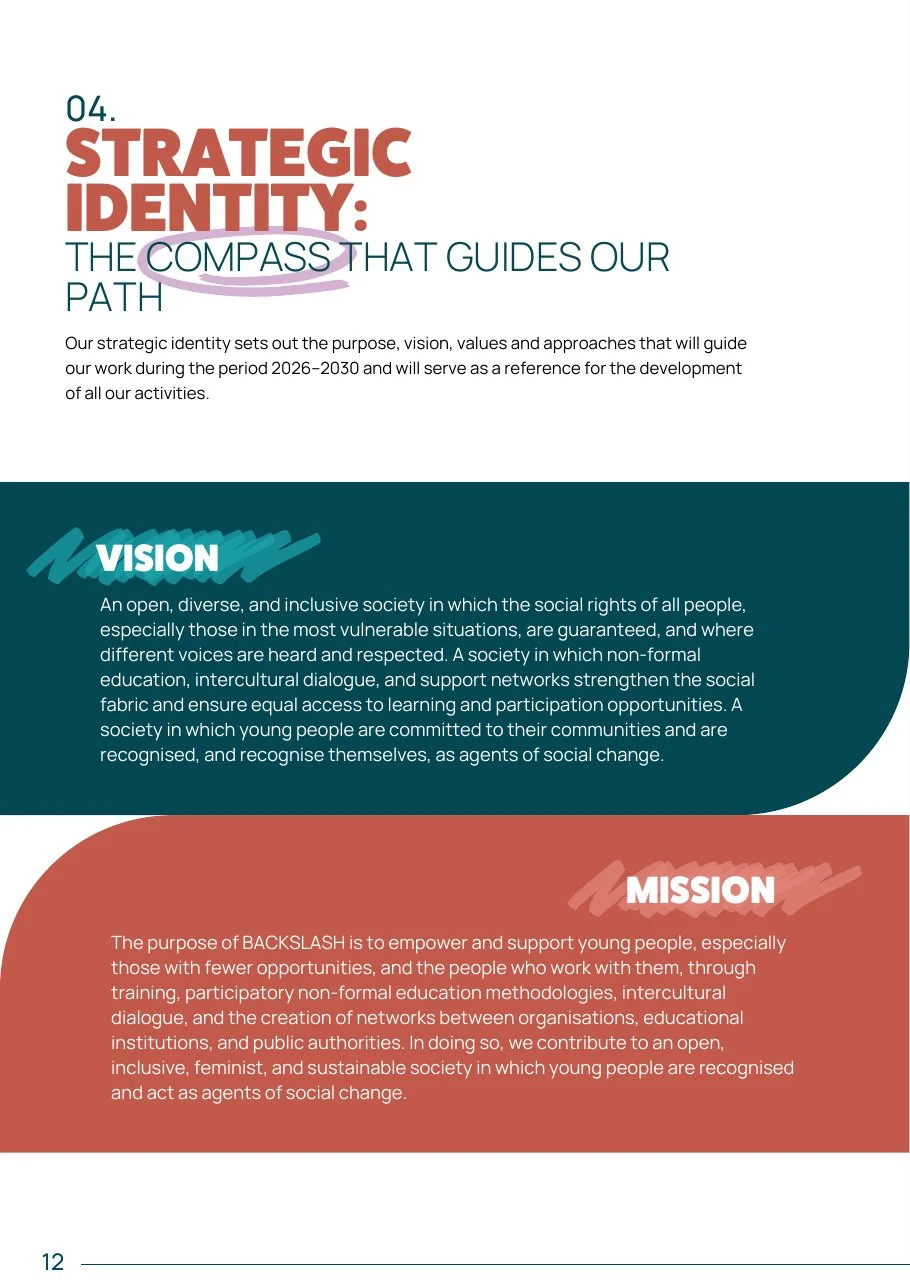
Vision and missionp. 12 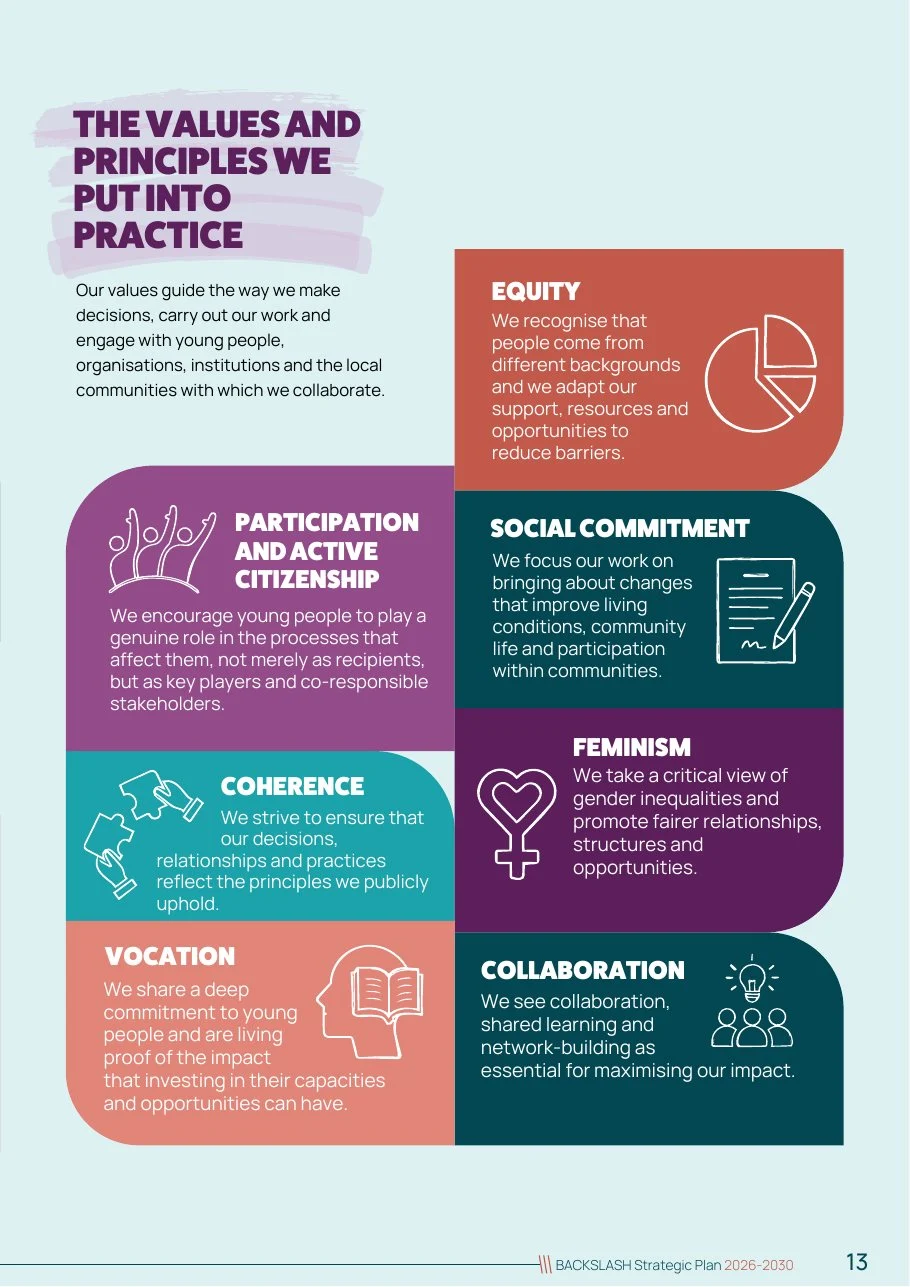
Values and principlesp. 13 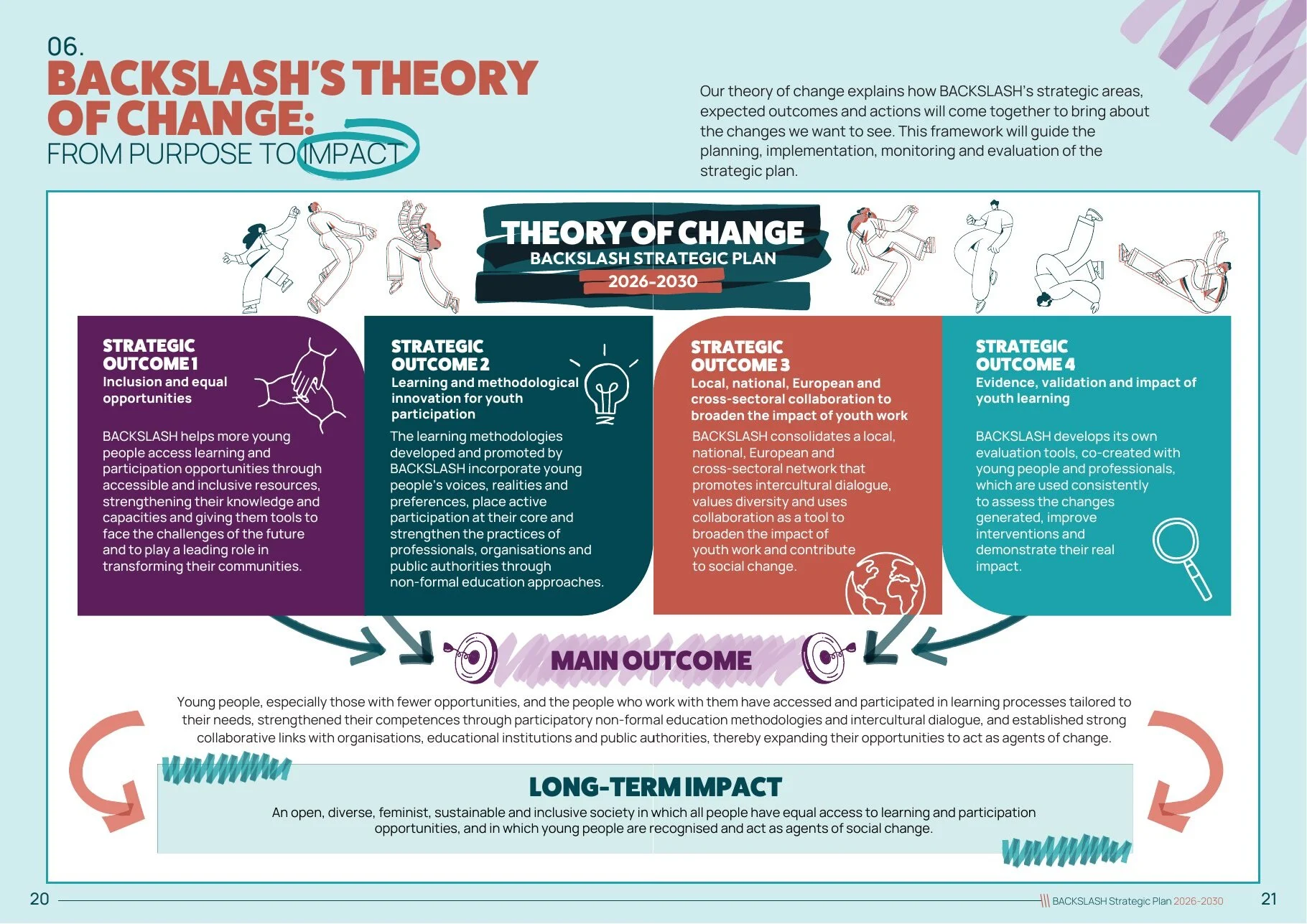
Theory of changepp. 20–21 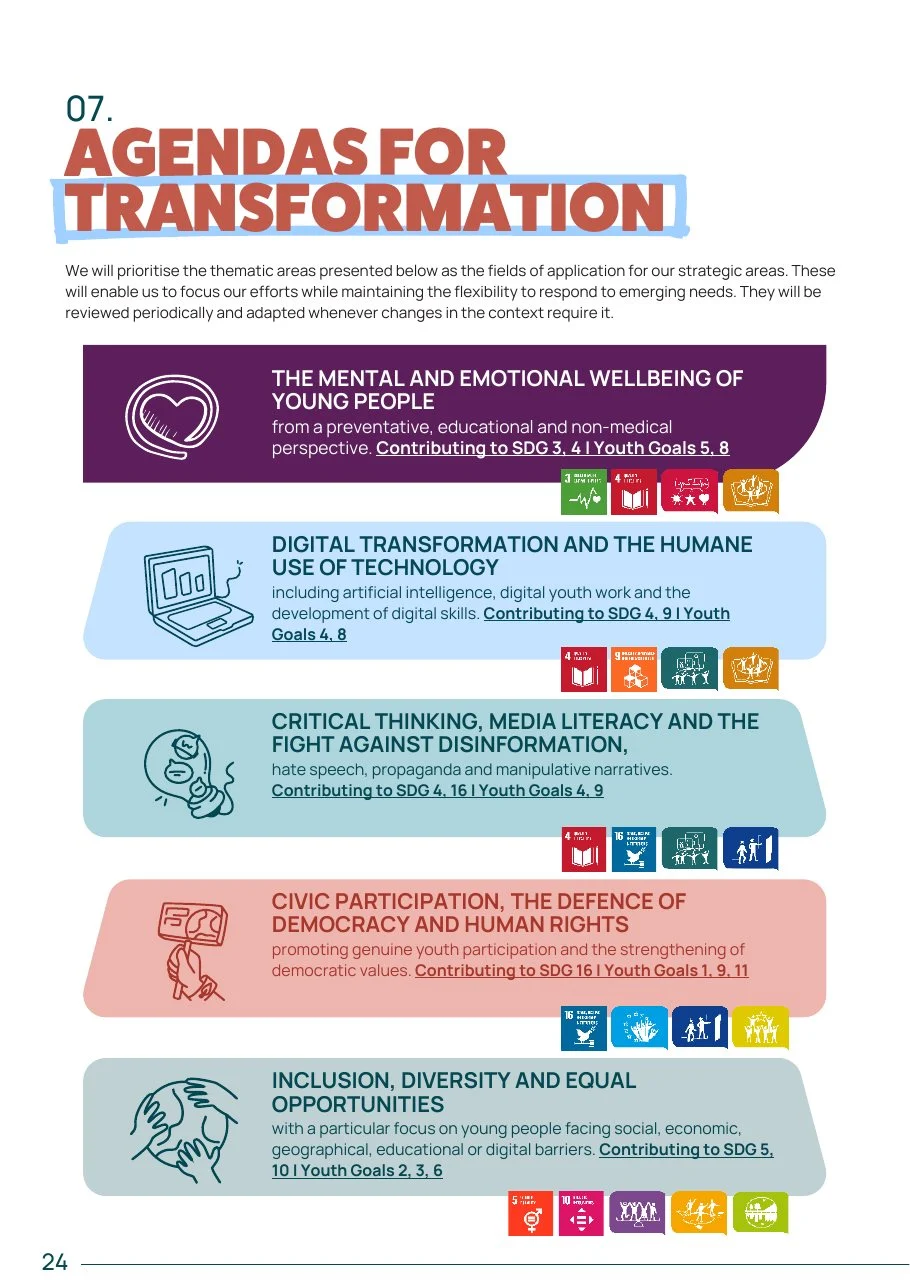
Agendas for transformationp. 24
Read the plan online
A living document
We see the Strategic Plan 2026–2030 as a living document. It will be reviewed every year, with a mid-term evaluation in 2028 and a final evaluation in 2030 to analyse the results and their sustainability, so that our mission, the needs of young people, the opportunities to collaborate and our own capacity stay in step.