
· News
16,000 kilometres from Brussels: ImmuniFact shows how far Erasmus+ can reach
ImmuniFact connects New Caledonia, Spain and Croatia through Erasmus+ to build young people's resilience to disinformation, and shows that European cooperation does not stop at Europe's geographical borders.
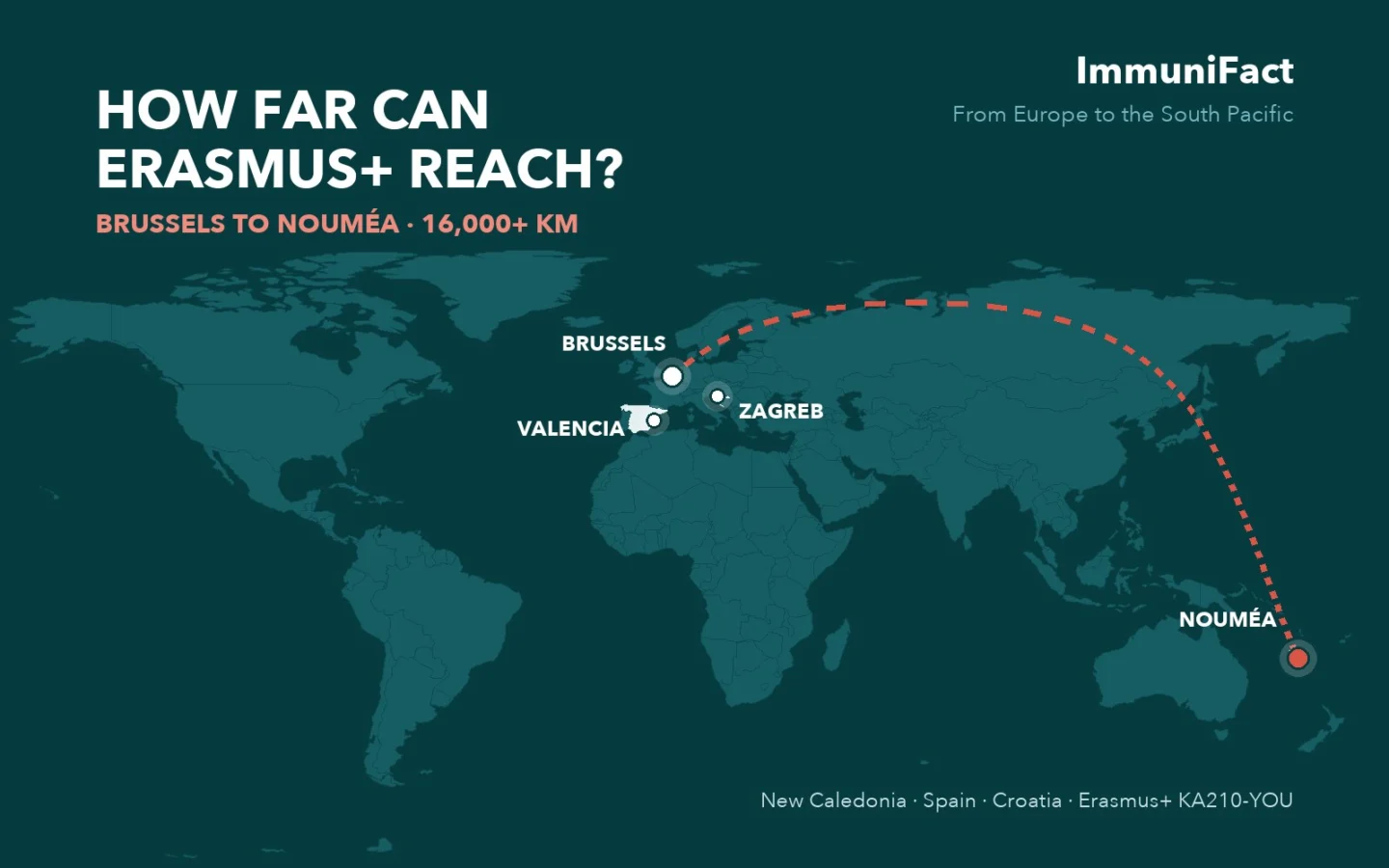
When we think about Erasmus+, we often picture young people travelling between European cities. Paris. Valencia. Zagreb. Brussels.
Nouméa is a little different.
New Caledonia lies in the South Pacific, east of Australia and more than 16,000 kilometres from Brussels. It is one of the most remote territories connected to the European project, and an Erasmus+ youth partnership involving BACKSLASH is being coordinated from there.
ImmuniFact – Building Immunity through Critical Thinking and Fact-Checking brings together organisations from New Caledonia, Spain and Croatia around a problem that looks strikingly similar even when communities are separated by half the planet: how young people deal with misinformation, manipulation and polarising content online.
For BACKSLASH, that makes ImmuniFact more than another Erasmus+ project. It shows, in practice, how far European cooperation can reach.
Europe, from the other side of the world
New Caledonia holds an unusual place in the European landscape. Geographically it is in the South Pacific. Institutionally it is one of the Overseas Countries and Territories (OCTs) associated with the European Union through France.
European programmes such as Erasmus+ can open a direct line between organisations there and partners thousands of kilometres away. ImmuniFact is what that looks like in practice, and it reverses a pattern that is still common in international cooperation: the project is coordinated by CDJ Territorial in New Caledonia, with BACKSLASH (Spain) and Udruga Zaželi (Croatia) as partners.
New Caledonia is not the remote territory receiving an activity designed somewhere in continental Europe. It is leading the project. That distinction matters.
Three countries, three contexts, one digital challenge
A young person in Nouméa, Valencia or Croatia lives in a very different geographical and cultural setting. Their digital environments, however, are increasingly shared. Platforms cross borders instantly, and so do misleading narratives, emotionally manipulative content and conspiracy theories.
ImmuniFact starts from that reality. It is developing practical ways to strengthen the ability of young people, and of the professionals who work with them, to understand how manipulation works and to respond critically. Its methodology combines two approaches:
- Prebunking helps people recognise common manipulation techniques before they meet them.
- Debunking builds the skills to investigate, verify and challenge false or misleading information that is already circulating.
The project is also creating a Media Literacy Compass, a self-assessment tool for young people and youth professionals to understand and strengthen their own media-literacy competences. The aim is not to tell young people what is true or false, but to strengthen their capacity to ask better questions themselves.
Research across 16,000 kilometres
The international dimension is already producing results. The partners have completed comparative research on media literacy, critical thinking and experiences of disinformation among young people in New Caledonia, Spain and Croatia, and a cross-country report now brings that evidence together. The findings are shaping the learning methodology and the tools.
That diversity is valuable. Where the same forms of manipulation appear in very different societies, we learn about challenges young people share. Where experiences differ, we learn how much local context matters. The goal is not to export a European model from Brussels to the Pacific, but to co-create approaches that learn from all three contexts.
More than 270 people directly involved
ImmuniFact aims to reach more than 120 youth professionals and 150 young people across the three territories. Professionals will be trained to pass what they learn on to colleagues and communities, creating a multiplier effect that continues beyond the project’s own activities. The methodology, research and tools are being designed for continued use after the funding period.
That matters especially for organisations far from the traditional centres of European programmes. A transnational project should leave behind more than a successful mobility or a final meeting. It should leave capacity.
Geographic inclusion is about more than eligibility
ImmuniFact also points to a broader question. European programmes have made real progress in opening opportunities to organisations and citizens in remote and overseas territories. But being eligible for a programme is not the same as having equal access to it.
Running an Erasmus+ project thousands of kilometres and many time zones from continental Europe brings very practical difficulties. Meetings fall at unusual hours. Travel is longer and more complicated. Informal programme knowledge and nearby support structures are harder to reach. And administration, pre-financing, reporting and project management do not get smaller because an organisation is remote.
This is why geographic inclusion cannot end with an eligibility map. If European programmes want genuinely diverse participation, organisations everywhere need the capacity and support to manage the whole project cycle. It is one of the most useful lessons from working with Europe’s overseas territories, and one we want to carry into how we support partners.
From Valencia to Nouméa
ImmuniFact is part of a deliberate effort by BACKSLASH to work with territories that remain under-represented in European projects. In 2025 we began new partnerships in Greenland, Saint Martin and New Caledonia, opening a line of work with overseas territories, and ImmuniFact is one of its clearest results.
A small Erasmus+ partnership now connects young people and youth professionals in the Mediterranean, Central Europe and the South Pacific. Not as a theoretical commitment to inclusion, but as an actual project.
How far can Erasmus+ reach?
European cooperation does not have to stop where continental Europe ends, and neither do European ideas about participation, education and youth work. Knowledge does not have to travel in one direction either. A youth organisation in the Pacific can coordinate European partners. Research from New Caledonia can shape methods used in Spain. Practices developed in Croatia can be adapted on the other side of the world.
More than 16,000 kilometres from Brussels, European cooperation is still happening. With ImmuniFact, BACKSLASH is part of it.
ImmuniFact at a glance
- Programme: Erasmus+ KA210-YOU, small-scale partnership in youth
- Coordinator: CDJ Territorial (New Caledonia)
- Partners: BACKSLASH (Spain), Udruga Zaželi (Croatia)
- Period: 2026–2027
- Grant reference: 2025-2-FR02-KA210-YOU-000382664
- Expected reach: 120+ youth professionals and 150+ young people
Related projects
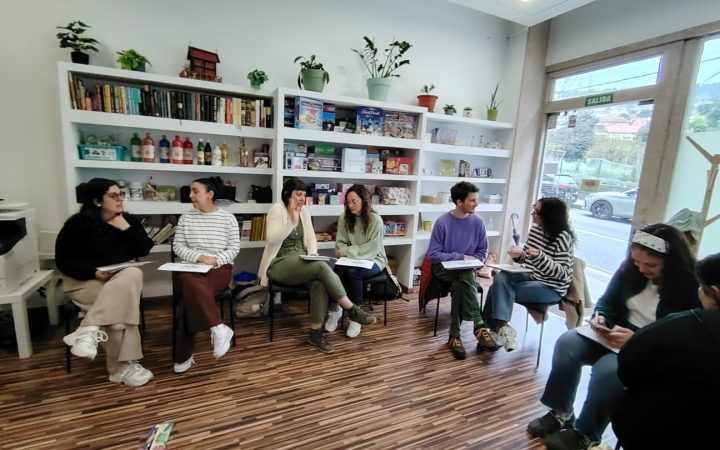
Erasmus+ · Active
ImmuniFact
ImmuniFact: building immunity through critical thinking and fact-checking
ImmuniFact trains youth professionals to counter social polarisation and digital disinformation by combining prebunking and debunking techniques with a digital media literacy self-assessment compass. Having completed initial research…
2026–2027
View the project ImmuniFact: building immunity through critical thinking and fact-checking
More news
· News
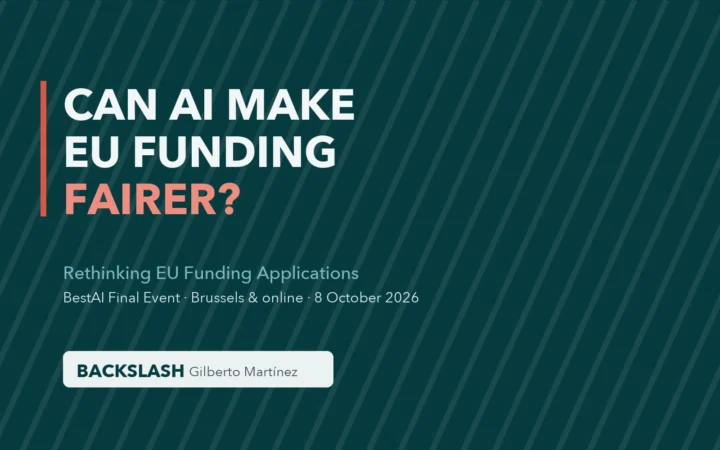
BACKSLASH joins the European debate on AI and fairer access to EU funding
On 8 October, BACKSLASH Director Gilberto Martínez takes part in the BestAI Final Event in Brussels to ask whether AI can make EU funding…
· News
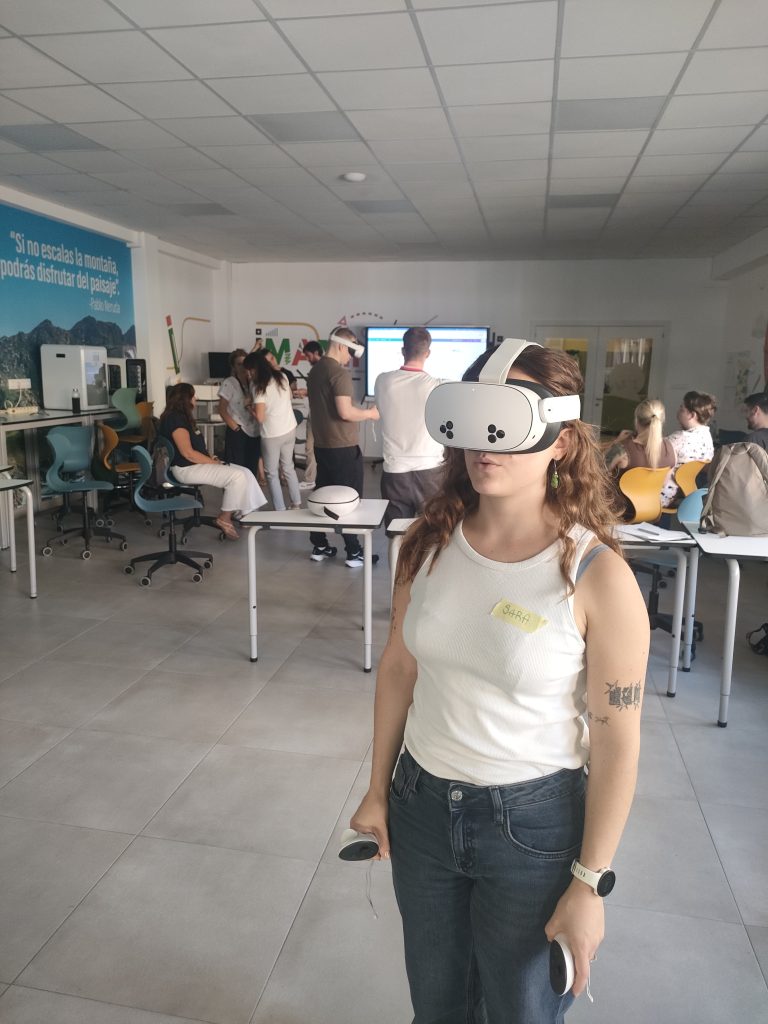
DigiMental Training of Trainers in Vigo
From 23 to 25 September, Backslash organised the DigiMental training at Colegio Montesol in Vigo, which welcomed youth professionals from the Erasmus+ project DigiMental,…
Project: DIGI-MENTAL
· News
BACKSLASH presents its Strategic Plan 2026–2030
After a participatory process that combined our own reflection, our track record since 2014 and the voices of young people and youth professionals, we…